

This Content Is Only For Subscribers
In the property management industry, intuition is a dangerous substitute for data. When you manage a handful of properties, you might be able to keep your occupancy rates and turnover timelines in your head. But as your portfolio scales, and particularly when the frantic Texas summer leasing season hits, relying on “gut feeling” to price your units or gauge market demand will inevitably cost you money.
The transition from an analog landlord to a digital property manager is not just about making tasks easier; it is about gaining visibility into your business. Modern property management platforms offer a suite of reporting and analytics tools that transform raw data into actionable intelligence. If you are not tracking your summer occupancy digitally, you are flying blind during the most critical season of the year.
The Problem with the Analog “Vacancy Rate”
When an analog landlord calculates their vacancy rate, they typically look at a single snapshot in time. “I have ten units, and one is empty right now, so my vacancy rate is 10%.”
This is a fundamentally flawed metric, especially during the summer. It fails to account for the velocity of turnovers, the average days on market, and the financial impact of the “make-ready” period. A unit that sits vacant for 45 days in July because it was priced too high is a much larger problem than a unit that sits vacant for five days while contractors turn it over.
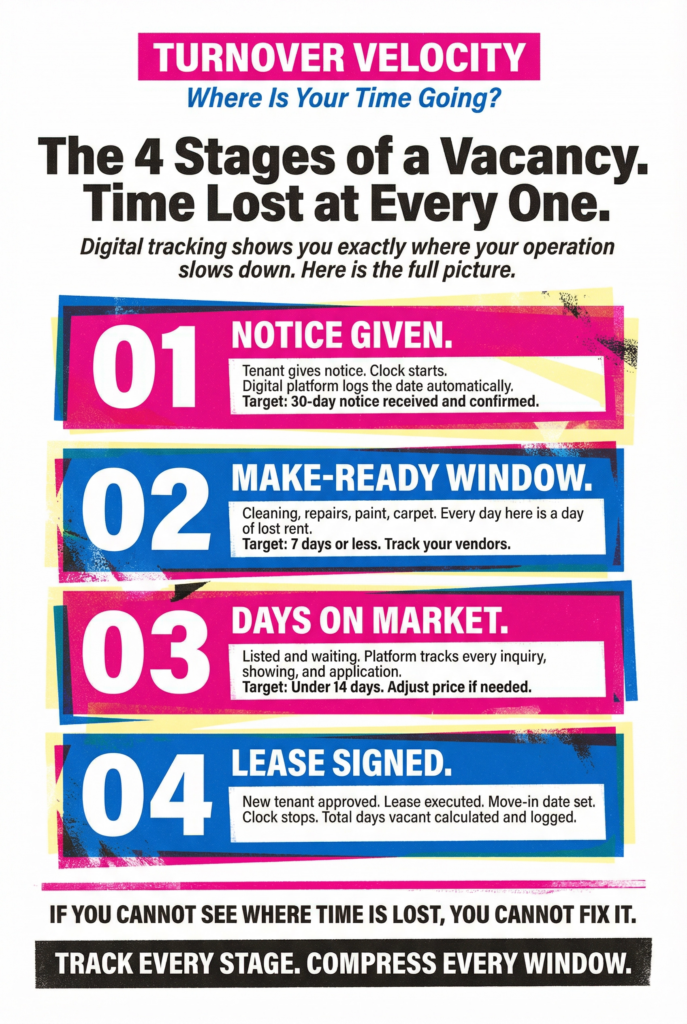
Digital platforms track the entire lifecycle of a vacancy. The clock starts the moment a tenant gives notice and stops the day the new lease begins. This provides a true “Days Vacant” metric, allowing you to pinpoint exactly where the bottlenecks are occurring in your operation.
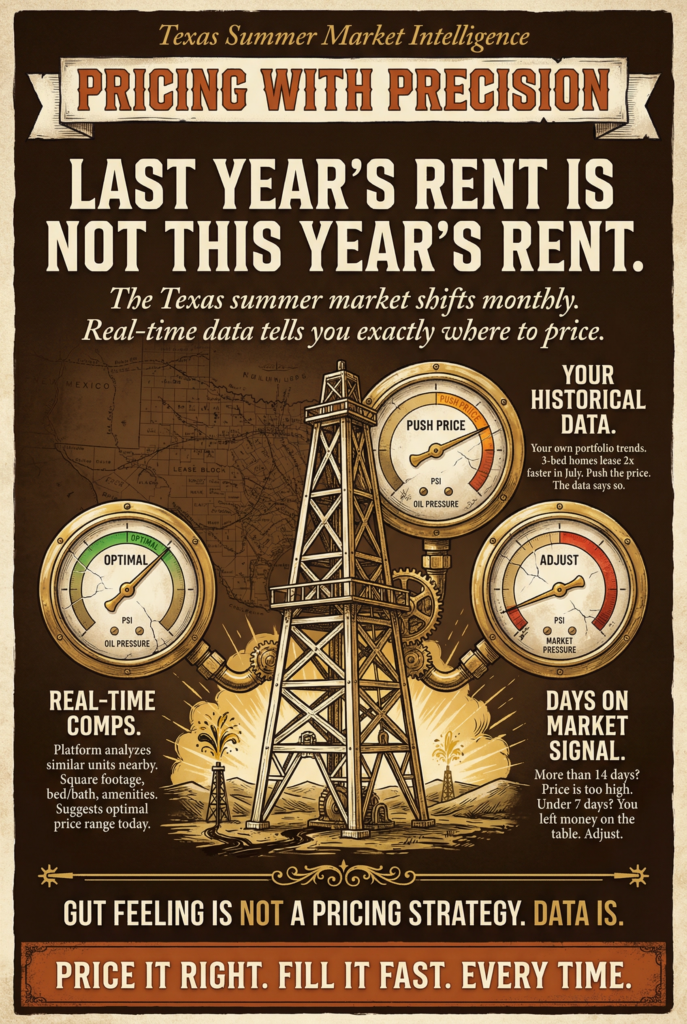
Pricing with Precision, Not Guesswork
The Texas summer market is incredibly dynamic. Rents that were competitive in April might be undervalued by June and overvalued by August as the back-to-school rush subsides. If you are setting your rent prices based on what you charged last year, or by scrolling through Zillow for five minutes, you are likely leaving money on the table or risking extended vacancies.
Comprehensive property management software integrates with broader market data to provide real-time rent comparables. When you list a property through these platforms, the system analyzes similar units in the immediate neighborhood—factoring in square footage, bed/bath count, and amenities—and suggests an optimal price range.
Furthermore, by tracking your own historical data digitally, you can identify seasonal trends specific to your portfolio. If your data shows that three-bedroom single-family homes lease twice as fast in July as they do in September, you know you have the leverage to push the rent slightly higher during that peak window.
Identifying Operational Bottlenecks
A high vacancy rate is a symptom; the disease is usually an operational bottleneck. Digital tracking allows you to diagnose the disease.
Most platforms allow you to segment the vacancy period into distinct phases: Notice Given, Make-Ready, Listed, Application Pending, and Leased. By analyzing these phases across multiple turnovers, patterns emerge.
If your “Make-Ready” phase consistently averages 14 days, you know your contractor coordination is failing, and you need to build a better vendor roster. If your “Listed” phase averages 30 days, your pricing is likely too high, or your listing photos are poor. If your “Application Pending” phase is dragging on for five days, your screening process is too slow, and you are losing applicants to faster competitors.
You cannot fix a problem you cannot measure. Digital tracking provides the measurement.
The Forward-Looking Rent Roll
Finally, digital platforms provide a crucial tool for surviving the summer: the forward-looking rent roll.
An analog rent roll tells you who lives in your properties today. A digital rent roll, integrated with your lease expiration dates, tells you exactly what your exposure is 60, 90, and 120 days from now.
When you open your dashboard in May, the system should clearly highlight that you have four leases expiring in July and two in August. This forward visibility allows you to proactively contact those tenants for renewals, schedule contractors in advance for the anticipated turnovers, and adjust your marketing budget accordingly.
Tracking occupancy digitally is the difference between reacting to a vacancy when the keys are handed back and preparing for a turnover months before it happens. In the high-stakes environment of summer property management, that visibility is your most valuable asset.


