

This Content Is Only For Subscribers
No matter how meticulous your spring walkthrough is, components will fail. When you are managing rental properties in the relentless Texas summer, an air conditioning failure or a burst pipe is not a possibility; it is an inevitability.
The difference between a minor operational hiccup and a full-blown crisis lies entirely in your preparation. If your emergency response plan consists of frantically Googling “plumbers near me” at 2:00 AM on a Sunday in July, you have already lost. The contractors will be booked, the emergency fees will be astronomical, and your tenant will be furious. To survive the summer season, you must build and implement a robust emergency repair plan before the emergencies happen.
Defining the Emergency
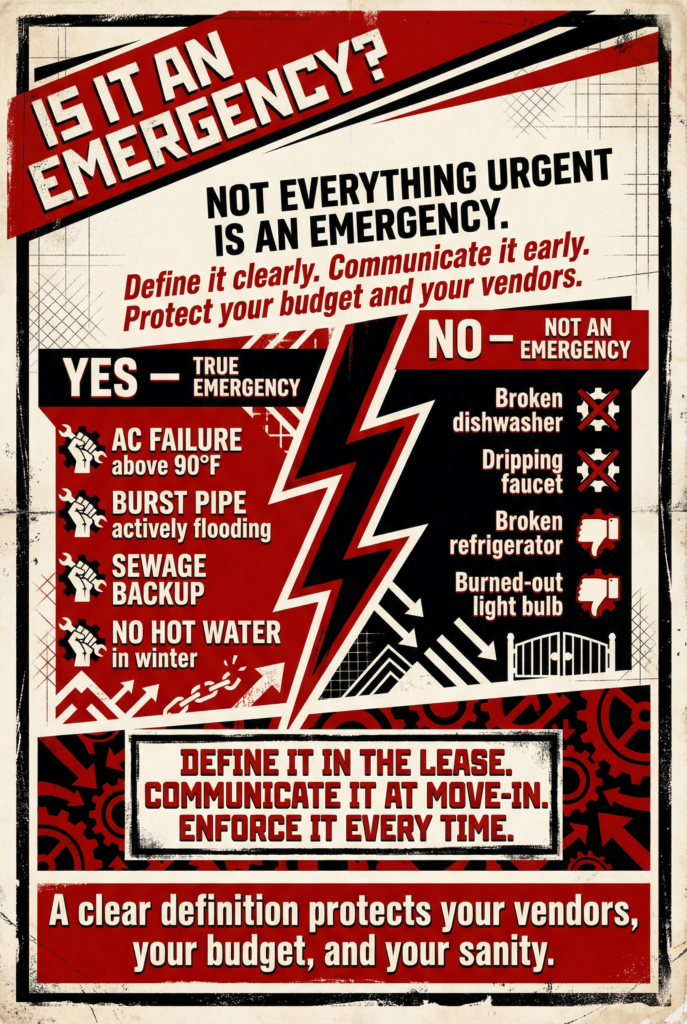
The first step in any emergency plan is defining what actually constitutes an emergency. Tenants will often label a dripping faucet or a broken dishwasher as a crisis. If you treat every urgent request as an emergency, you will burn through your maintenance budget and exhaust your contractors.
Your lease agreement and your tenant communication should clearly define an emergency. Generally, an emergency is a situation that poses an immediate threat to the tenant’s health and safety or threatens to cause significant, immediate damage to the property.
In a Texas summer, a complete loss of air conditioning when the outside temperature exceeds 90 degrees is an emergency. A burst pipe actively flooding the home is an emergency. A sewage backup is an emergency. A broken refrigerator, while highly inconvenient, is typically not an emergency that requires a midnight dispatch. By setting these boundaries clearly with your tenants at move-in, you manage their expectations and preserve your resources for true crises.
Building the Vendor Roster
You cannot execute an emergency plan without a reliable team. Your vendor roster is your most valuable asset during the summer rush.
Do not wait until July to find a good HVAC technician. In the spring, establish relationships with at least two reliable contractors in each major trade: HVAC, plumbing, electrical, and general handyman services. Why two? Because when your primary HVAC guy is completely booked for three days during a heatwave, you need a backup you already trust.
When vetting these vendors, ask specific questions about their emergency protocols. Do they offer 24/7 service? What are their after-hours dispatch fees? What is their guaranteed response time for existing clients? A contractor who charges a slightly higher hourly rate but guarantees a two-hour response time is infinitely more valuable during a summer crisis than a cheap contractor who might show up on Tuesday.
The Tenant’s Role in Mitigation
An effective emergency plan requires the tenant’s active participation. When a pipe bursts, the damage compounds by the minute. If the tenant has to wait for a plumber to arrive to stop the flooding, your property will suffer catastrophic damage.
During the move-in walkthrough, you must physically show the tenant how to mitigate damage before help arrives.
•The Main Water Shut-Off: Show them exactly where the main water shut-off valve is located (usually near the street in a meter box or where the main line enters the house). Ensure they know how to turn it.
•Individual Shut-Offs: Show them the shut-off valves under the sinks and behind the toilets.
•The Electrical Panel: Show them the breaker box and explain how to flip the main breaker or isolate a specific circuit if an electrical issue arises.
A tenant who knows how to shut off the water instantly transforms a flooding emergency into a contained plumbing repair.
The Communication Protocol
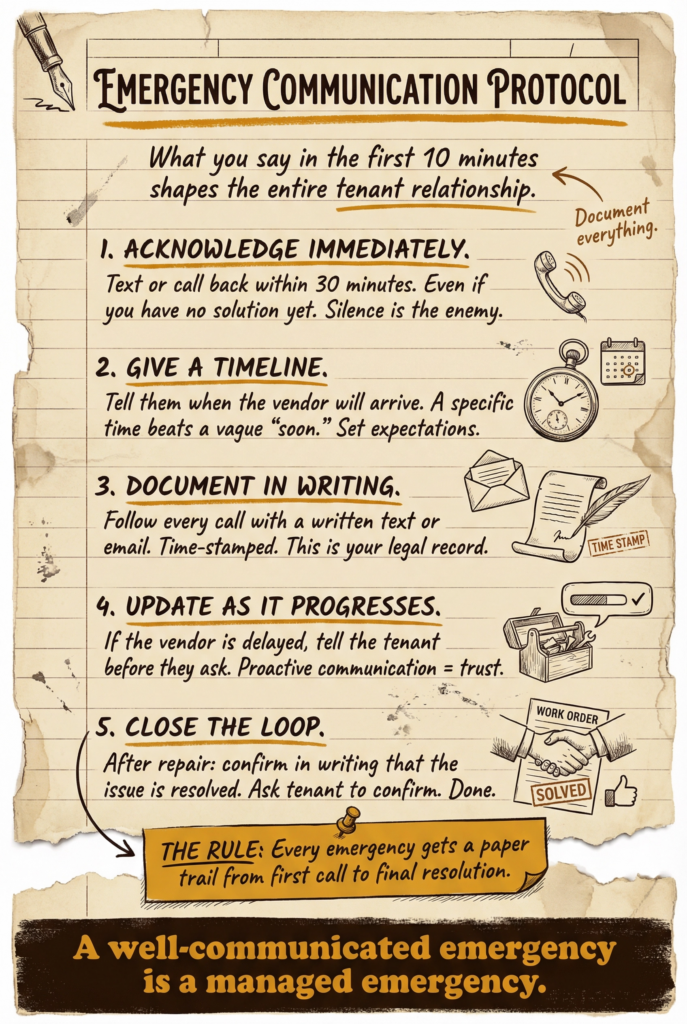
When an emergency strikes, communication must be immediate and documented. Relying on a tenant to leave a voicemail on your personal cell phone is a recipe for disaster.
Implement a centralized, 24/7 maintenance answering service or utilize property management software with an emergency dispatch feature. The tenant should have a single, dedicated phone number to call that immediately routes the request to you or your designated emergency vendor.
Once the emergency is reported, communicate your action plan to the tenant immediately. “I have received your request, the main water is off, and Smith Plumbing will be there within two hours.” This level of responsiveness de-escalates the tenant’s panic and demonstrates professional competence.
Preparation is Profit
Handling an emergency repair is stressful, but it should never be chaotic. By clearly defining emergencies, securing a reliable vendor roster, educating your tenants on mitigation, and establishing a bulletproof communication protocol, you transform summer crises into manageable events. In property management, a well-executed emergency plan is not just about fixing the property; it is about protecting your bottom line.


