

This Content Is Only For Subscribers
A standard residential lease is a broad instrument. It covers the fundamental legalities of tenancy: rent amount, due dates, late fees, and the basic obligations of both landlord and tenant. However, a standard lease rarely possesses the granularity required to manage the specific, seasonal challenges that arise in Texas property management.
When the intense Texas heat arrives, or when sudden winter freezes threaten plumbing infrastructure, relying on a boilerplate lease often leaves landlords legally exposed. The solution lies in the strategic use of lease addendums. An addendum is a legally binding document attached to the primary lease that modifies or expands upon its terms. When drafted correctly, seasonal addendums transform vague expectations into enforceable rules.
The Problem with Ambiguity
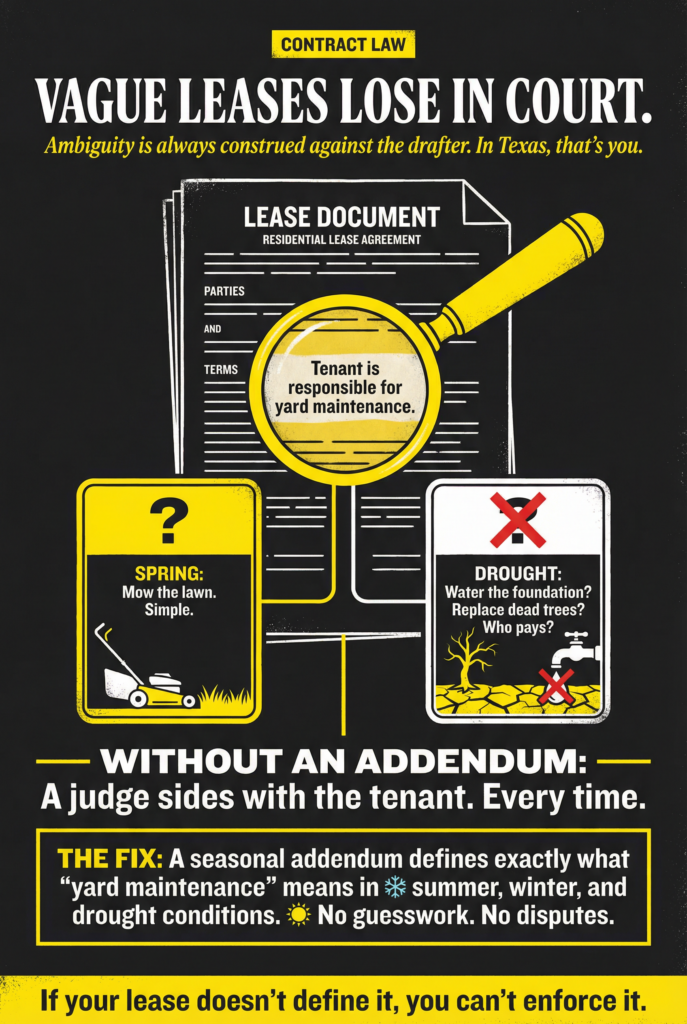
In contract law, ambiguity is generally construed against the drafter—which, in almost all residential scenarios, is the landlord. If a dispute arises over a vague lease term, a judge is likely to side with the tenant.
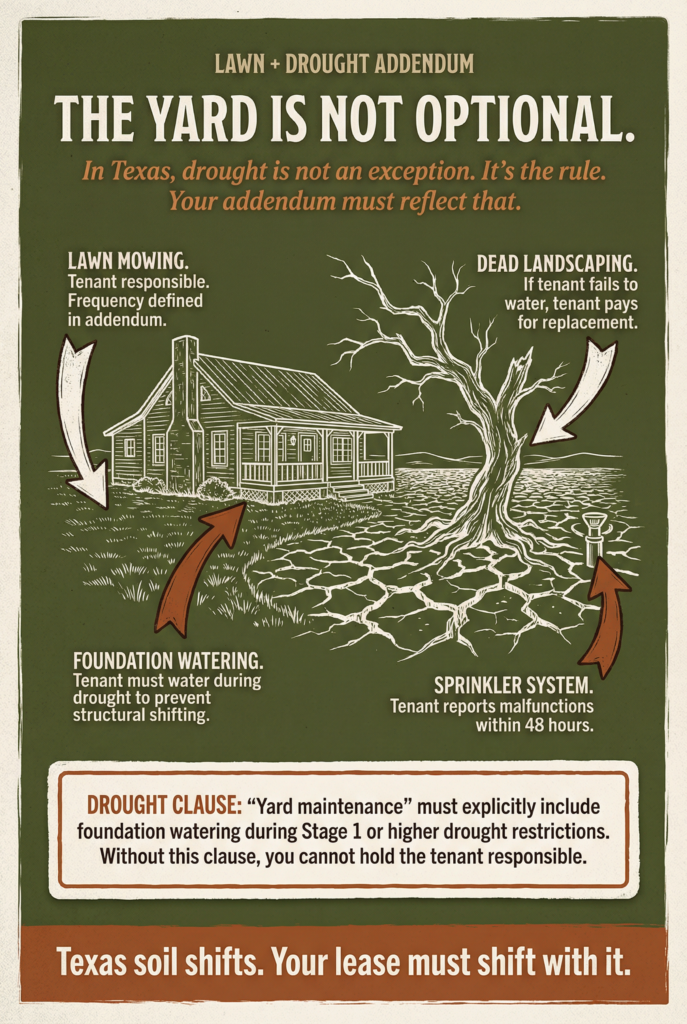
Consider a standard lease clause stating, “Tenant is responsible for yard maintenance.” In the spring, this might simply mean mowing the lawn. But what happens during a severe Texas drought? Is the tenant responsible for watering the foundation to prevent structural shifting? Is the tenant responsible for replacing dead landscaping if they fail to water it? If the lease simply says “yard maintenance,” the landlord will struggle to hold the tenant financially accountable for thousands of dollars in foundation repairs or dead trees.
Addendums eliminate this ambiguity by explicitly defining responsibilities that fluctuate with the seasons.
The Pool Maintenance Addendum
For properties with swimming pools, a specialized addendum is an absolute necessity, particularly given the heavy usage during the Texas summer. A pool represents a significant liability risk and a substantial maintenance expense.
A legally robust pool addendum must clearly delineate responsibilities. If the landlord provides professional pool service, the addendum should state the frequency of service and require the tenant to maintain proper water levels and keep the pool area free of debris between visits.
If the tenant is responsible for maintenance, the addendum must be exhaustively detailed. It should specify requirements for daily skimming, weekly chemical balancing, filter cleaning, and maintaining the water level above the skimmer line to prevent pump damage. Crucially, the addendum should include a clause stating that if the tenant fails to maintain the pool to a professional standard, the landlord reserves the right to hire a professional service and bill the cost back to the tenant as additional rent.
The Foundation Watering Addendum
The expansive clay soils prevalent in many parts of Texas are notoriously volatile. During extended summer droughts, the soil contracts, pulling away from the foundation and potentially causing severe structural damage.
A Foundation Watering Addendum is a critical protective measure. This document explicitly requires the tenant to utilize soaker hoses around the perimeter of the foundation during specific dry periods. It should outline the required frequency and duration of watering. While enforcing this addendum can be challenging, its presence in the lease establishes the tenant’s duty of care. If foundation damage occurs and it can be proven the tenant willfully neglected this duty, the addendum provides a legal basis for holding them liable.
The Winterization Addendum
While summer brings its own challenges, Texas landlords must also prepare for the increasingly unpredictable winter freezes. A Winterization Addendum is essential for protecting the property’s plumbing infrastructure.
This addendum should require the tenant to take specific preventative actions when temperatures are forecasted to drop below freezing. These actions typically include disconnecting exterior hoses, covering outdoor spigots, leaving sink cabinets open to expose pipes to ambient heat, and allowing interior faucets to drip.
From a legal perspective, the addendum should clearly state that the tenant will be held financially responsible for any burst pipes or resulting water damage if they fail to execute these specified winterization procedures.
Crafting Enforceable Language
The effectiveness of an addendum lies in its precision. Vague directives like “keep the pool clean” or “protect the pipes” are legally insufficient. You must specify the action required, the frequency of the action, and the consequence of failing to perform the action.
Furthermore, an addendum is only enforceable if it is signed and dated by all parties listed on the primary lease. During the rush of summer move-ins, ensure these addendums are not merely handed to the tenant in a welcome packet, but are formally executed as part of the lease signing process. By proactively addressing seasonal risks through precise legal language, you transform potential liabilities into managed expectations.


