This Content Is Only For Subscribers
The concept of dynamic pricing is not new. Airlines, ride-sharing apps, and hotels have built entire industries around the principle that a product’s price should fluctuate based on real-time demand. Yet, when it comes to long-term residential real estate, many investors still cling to the archaic “set it and forget it” model. They price a unit in January and refuse to adjust that number when the same unit comes vacant in July.
In the Texas summer market, static pricing is a liability. The leasing season from May to August is a period of hyper-demand, driven by school calendars and corporate relocations. To maximize your Net Operating Income (NOI) during this window, you must adopt a dynamic pricing strategy. Here is how to implement it effectively.

The “Test the Ceiling” Approach
The foundation of dynamic pricing in a high-demand market is discovering the absolute ceiling of what a tenant is willing to pay. You cannot find the ceiling by pricing at the median.
When a property comes vacant in June, your initial listing price should be intentionally aggressive. If your market analysis suggests the unit should rent for $1,800, list it at $1,950.
The logic here is simple: in a market characterized by low inventory and high urgency, speed is often more valuable to a tenant than price. A family relocating to Dallas two weeks before the school year begins is not going to haggle over $150 a month; they are going to secure the first quality home they can find. If you capture that premium, you have permanently increased the cash flow of that asset for the duration of the lease.
The 72-Hour Rule
The inherent risk of testing the ceiling is vacancy. If you list a property at $1,950 and stubbornly hold that price for three weeks while the unit sits empty, you have wiped out any potential gain from the higher rent.
Dynamic pricing requires velocity. You must implement a strict 72-hour adjustment rule.
When you list at an aggressive premium, you are looking for immediate market validation. If you receive multiple inquiries and applications within the first three days, the market has accepted your price. If 72 hours pass with zero showings and zero applications, the market has rejected it.
You must drop the price immediately. Do not wait a week. Do not wait until the weekend. Drop the price by 3% to 5% and reset the 72-hour clock. This rapid, stair-step approach allows you to systematically probe the top of the market without suffering the catastrophic financial drain of an extended vacancy.
Pricing the “Make-Ready” Premium
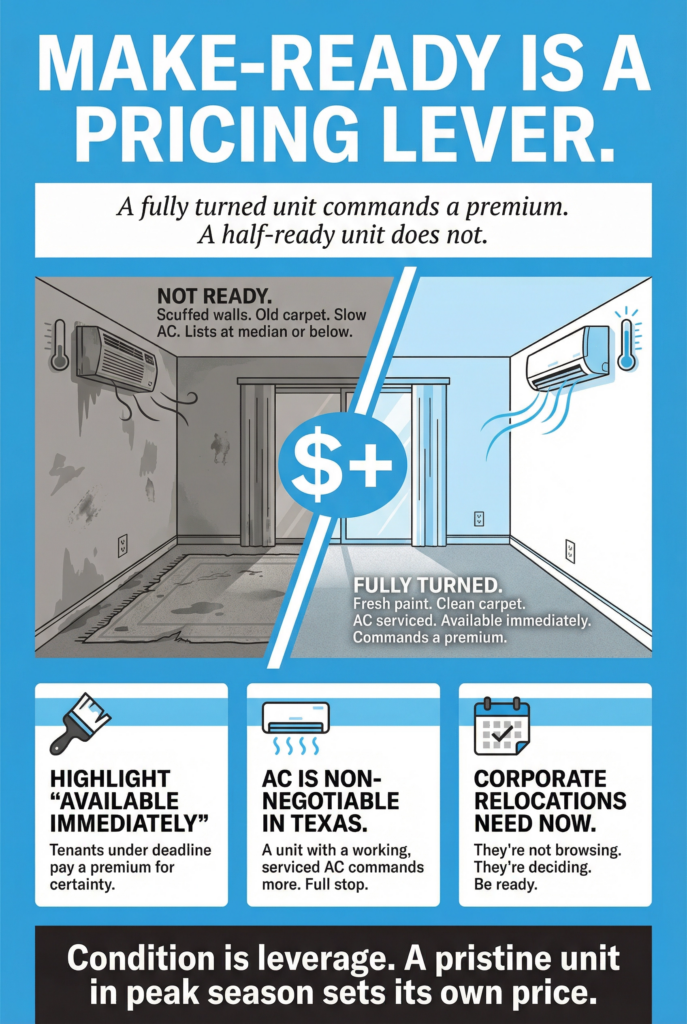
In the summer, the condition of the property is a massive pricing lever. A unit that is fully turned, professionally cleaned, and ready for immediate occupancy commands a significant premium over a unit that will be ready in two weeks.
If you have a vacant, turn-key property in July, you should price it at the absolute top of the comparable range. Highlight “Available Immediately” as the primary feature in your marketing. Tenants who are currently living in short-term rentals or hotels while they search for a home will gladly pay a premium to stop the bleeding on their temporary housing costs.
Conversely, if you are pre-leasing a unit that is currently occupied and requires a two-week make-ready period after the current tenant vacates, you have less leverage. You should price this unit closer to the market median, as you are asking the incoming tenant to assume the risk of a delayed move-in.
The Strategic Lease Term
Dynamic pricing is not just about maximizing the monthly rent; it is about positioning the asset for the next turnover.
If you secure a tenant at a premium summer rate, your goal is to ensure that lease expires during the next summer peak. If you sign a standard 12-month lease in July, you are fine. But what if you secure a tenant in late September, just as the market is cooling?
If you sign a 12-month lease in September, you guarantee that your next vacancy will occur during the fall slowdown. Instead, offer a 9-month or a 21-month lease. The monthly rent might be slightly lower than your summer peak, but by forcing the expiration date into the following June, you ensure that your next turnover will occur when you have maximum pricing power.
Dynamic pricing requires active management, constant market monitoring, and the discipline to adjust quickly. But in the business of real estate investing, that effort is the difference between average returns and exceptional cash flow.