This Content Is Only For Subscribers
Let’s be honest for a second: most landlord-tenant conflicts don’t start with malice. They start with a misunderstanding. A tenant thinks “normal wear and tear” covers a toddler drawing on the wall with permanent marker. You assume they know that the massive oak tree in the front yard needs watering during a Texas drought. Suddenly, everyone is frustrated, and a relationship that should be mutually beneficial turns adversarial.
The secret to a peaceful, profitable leasing experience isn’t just finding great tenants—it’s setting crystal-clear expectations from the very beginning. When everyone knows the rules of the game before the first pitch is thrown, you eliminate the vast majority of headaches down the road.
Here is how you can proactively communicate expectations and build a solid foundation with your new residents.
The Lease is the Law (But it Needs a Translator)
Your lease agreement is the ultimate document of expectations. It outlines rent deadlines, pet policies, maintenance responsibilities, and the consequences of breaking the rules. However, let’s be realistic: very few tenants actually read a 15-page legal document line by line. They skim it, sign it, and forget it.
You cannot rely solely on the lease to communicate your expectations. You need to act as a translator.
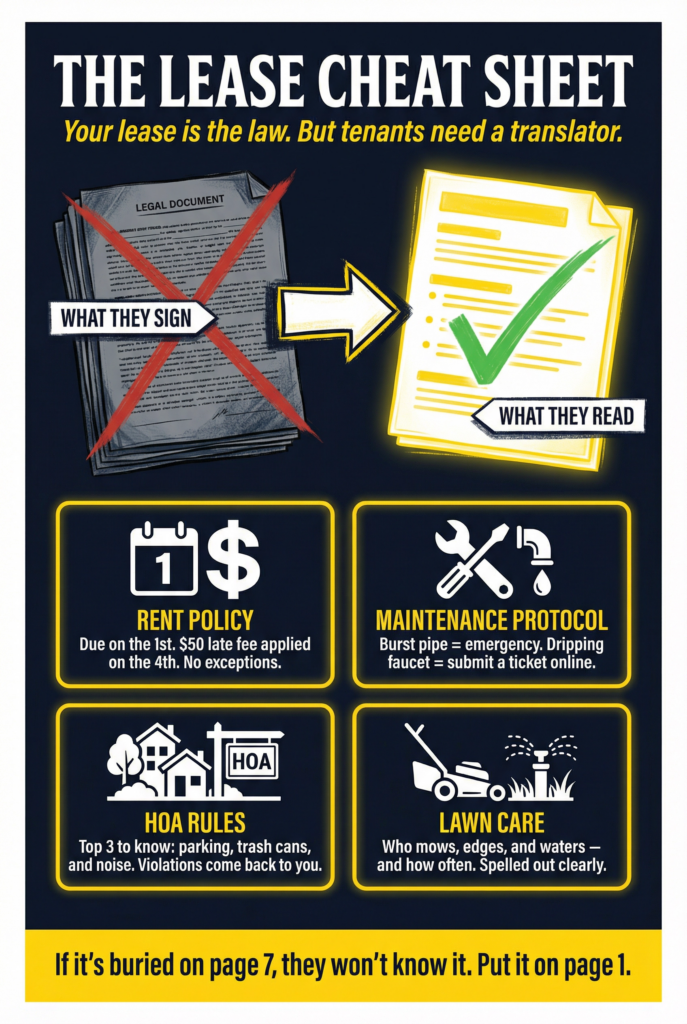
When a tenant signs the lease, provide them with a one-page “Cheat Sheet” or “Quick Reference Guide.” This document should pull the most critical, day-to-day rules out of the legalese and put them into plain English.
Your cheat sheet should prominently feature:
•Rent Policies: When is rent due? What is the exact late fee, and when does it apply? (e.g., “Rent is due on the 1st. On the 4th, a $50 late fee is applied.”)
•Maintenance Protocol: What constitutes an emergency (a burst pipe) versus a routine request (a dripping faucet)? How do they submit a ticket?
•HOA Rules: If your property is in an HOA, what are the top three rules they need to know immediately? (Usually, these involve parking, trash cans, and noise.)
•Lawn Care: Who is responsible for mowing, edging, and watering?
By highlighting these key points, you ensure the most important expectations aren’t buried on page seven, subsection C.
Define “Emergency” Maintenance
One of the quickest ways to burn out as a property manager is answering midnight phone calls for non-emergencies. A tenant whose air conditioning goes out in August at 2:00 PM has an emergency. A tenant whose garbage disposal is jammed at 11:00 PM on a Saturday does not.
You must define what an emergency is before one happens.
In your welcome packet, provide a clear, bulleted list of situations that warrant a call to the emergency line. Typically, this includes:
•Active flooding or uncontrollable water leaks.
•Total loss of power (when the rest of the neighborhood still has power).
•No heat when the temperature drops below freezing.
•No air conditioning when the temperature rises above 85 degrees.
•A major structural failure (like a tree falling on the roof).
Explicitly state that anything not on this list should be submitted through the online maintenance portal and will be addressed during normal business hours. Setting this boundary early protects your sanity and your sleep schedule.
The Move-In Walkthrough: A Visual Baseline
Words are great, but visuals are better. The move-in walkthrough is your best opportunity to set expectations regarding the physical condition of the property.
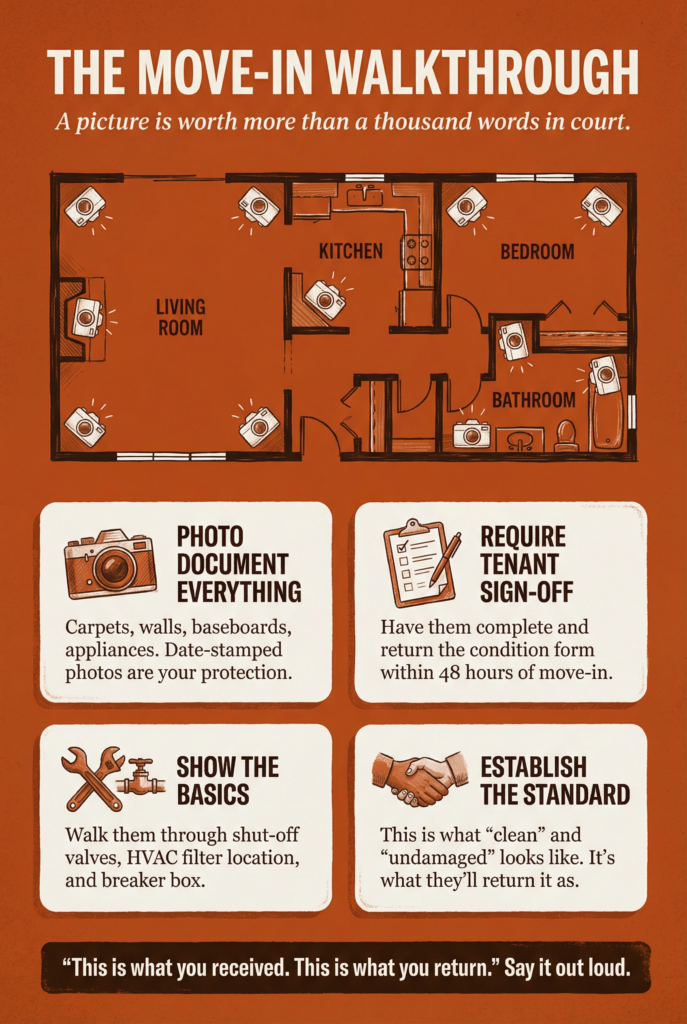
Don’t just hand over the keys and the condition form. Walk the property with them (or require them to submit a detailed, photographic report within 48 hours if you use a self-guided move-in). Point out the pristine condition of the carpets, the freshly painted baseboards, and the clean oven.
This establishes a baseline. It subtly communicates, “This is the condition I expect the property to be in when you leave.” It also gives you a chance to demonstrate how things work—show them where the water shut-off valve is, how to change the HVAC filter, and how to reset the breaker box.
Enforce the Rules Consistently
Finally, communicating expectations means nothing if you don’t enforce them. If your lease states that a late fee is applied on the 4th of the month, you must apply it on the 4th of the month. Every single time.
If you waive the late fee “just this once” because they had a good excuse, you have just communicated a new expectation: your deadlines are flexible, and your rules are negotiable.
Consistency isn’t about being cruel; it’s about being professional. When tenants know exactly what to expect from you—fairness, responsiveness, and firm boundaries—they will respect the property and the lease. Start strong, communicate clearly, and enjoy a much smoother leasing experience.