

This Content Is Only For Subscribers
If you’ve owned a single-family rental for more than one full year, you’ve already felt it: rentals have seasons.
Some months your phone lights up with inquiries and you’re choosing between three well-qualified applicants. Other months, the same house sits a little longer, showing traffic is thinner, and you find yourself asking, “Do I tweak the rent, or do I just wait?”
Seasonality isn’t just a leasing detail. It’s an investor lever. When you understand how demand, pricing power, and turnover costs change throughout the year, you can time renewals, turnovers, and upgrades in a way that protects cash flow and increases long-term returns.
This article is a practical playbook for small landlords renting houses (not apartments). We’ll talk about why the market heats up and cools down, how to position your property in each season, and how to use seasonal patterns to make smarter decisions—without turning landlording into a second full-time job.
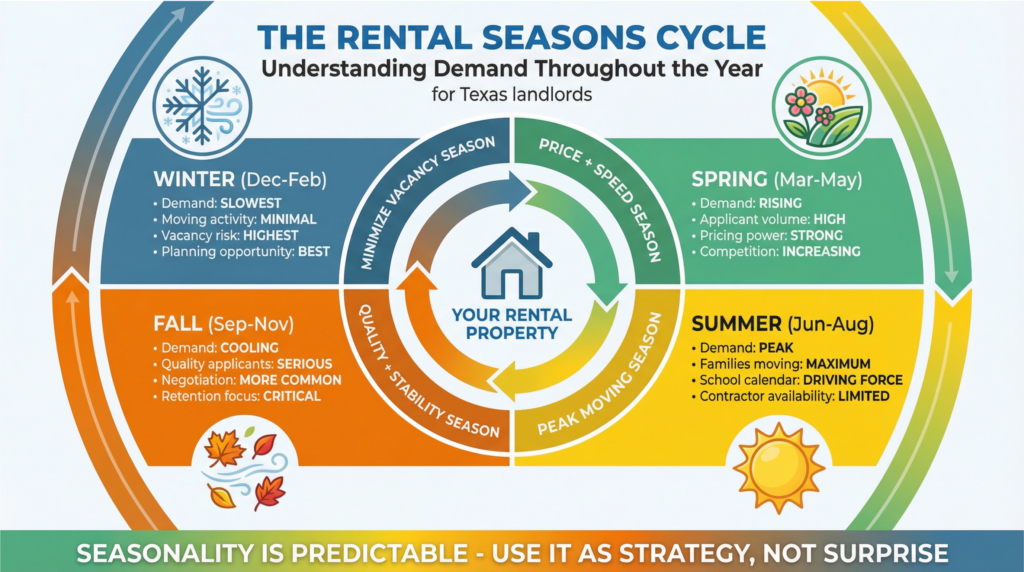
Why rentals have seasons (and why houses feel it differently)
The rental market is seasonal because people are seasonal.
Families prefer moving when school is out, weather is decent, and work schedules are less chaotic. Industry groups regularly describe late spring through summer as “peak moving season.” For example, the American Trucking Associations’ Moving & Storage Conference ties the start of peak season to May, noting that millions of Americans move during the May–September window.
That seasonality shows up in rental data as well. Zillow notes that June typically marks peak intensity in the rental market, driven by school calendars and lease cycles—though conditions can still vary year to year.
Single-family rentals amplify these patterns because:
- Your typical tenant is more likely to be a family or household that cares about school zones and moving logistics.
- Curb appeal matters more (yard, exterior, driveway, porch).
- The “move decision” is often tied to life events (new baby, job relocation, buying plans falling through).
In other words: apartments can sometimes fill with a flexible move-in crowd. Houses often fill with planners—and planners have calendars.
The investor mindset shift: you’re not just setting rent, you’re timing cash flow
Seasonality affects three numbers that drive your returns:
- Days vacant (and how expensive vacancy feels)
- Effective rent (rent minus concessions, vacancy loss, and make-ready spend)
- Turnover cost (repairs, paint, cleaning, landscaping, your time, vendor premiums)
The goal isn’t to “win” every season. The goal is to make seasonality work for you:
- Use peak season for pricing power and faster lease-up.
- Use slower season for stability, retention, and targeted improvements that prevent bigger costs later.
The seasonal playbook for single-family landlords
Spring and early summer: the “price + speed” season
This is the season when:
- Applicant volume rises
- Good tenants are more decisive
- Competition for contractors (and movers) increases
- You have the most leverage to choose a strong applicant
How to capitalize:
List earlier than you think.
If your property will be ready in late May or June, start your marketing and pre-screening sooner so you’re not scrambling. Even if you don’t “pre-lease,” you can build a short list and tighten your vacancy window.
Treat curb appeal like a multiplier.
In peak season, you’re competing against more inventory. Simple exterior wins matter: trimmed shrubs, clean beds, pressure-washed walkways, a working front light, and a front door that looks cared for. For houses, the exterior is part of the unit.
Price to the market—but don’t get greedy.
Peak season tempts landlords to overshoot. The risk isn’t that you can’t get anyone—it’s that you miss the best tenants by being just high enough to feel “not worth it,” then you chase the market downward after two slow weeks.
A practical approach:
- Start at a confident but defensible asking rent.
- Watch inquiry quality and volume for 5–7 days.
- Adjust quickly if showing traffic is weak.
Use lease terms strategically.
If you sign a new tenant in June, you’re also choosing the future lease cycle. A 12-month lease means you’ll likely face your next turnover in June again—great for demand, potentially harder for vendor scheduling. A 13–15 month lease can shift future turnover to a more convenient window.
There’s no single “best,” but it’s worth making the cycle a choice, not an accident.
Late summer: still strong, but watch the shift
Late summer can remain busy, but you’ll often see:
- Families pushing to move before school starts
- Less flexibility on move-in dates
- A gradual increase in price sensitivity
How to capitalize:
- Tighten screening. High demand can tempt you to rush.
- Be clear about move-in deadlines and deposit policies.
- If you’re doing upgrades, move fast—contractors are still busy.
Fall: the “quality and stability” season
In fall, demand typically cools. That doesn’t mean the market is bad—it means the market is different.
Expect:
- Fewer applicants, but often more serious ones
- More negotiation (“Would you do $X?”)
- A little more time between showings
How to capitalize:
Prioritize retention and smart renewals.
Fall is a great time to lock in good tenants because their alternatives are fewer and moving is less appealing. If your tenant has been solid, a well-timed renewal offer can reduce turnover risk and keep your winter predictable.
Adjust your marketing: lead with the “house benefits.”
In slower seasons, your listing needs to do more work. Houses have strengths that apartments don’t:
- garage storage
- fenced yard
- driveway parking
- quiet street
- space for kids/pets/home office
Make those benefits obvious and specific, not generic.
Be willing to trade a little rent for less vacancy.
A small rent reduction is often cheaper than two extra weeks vacant—especially when you factor in utilities, lawn care, and your time. Think in “effective rent,” not sticker rent.
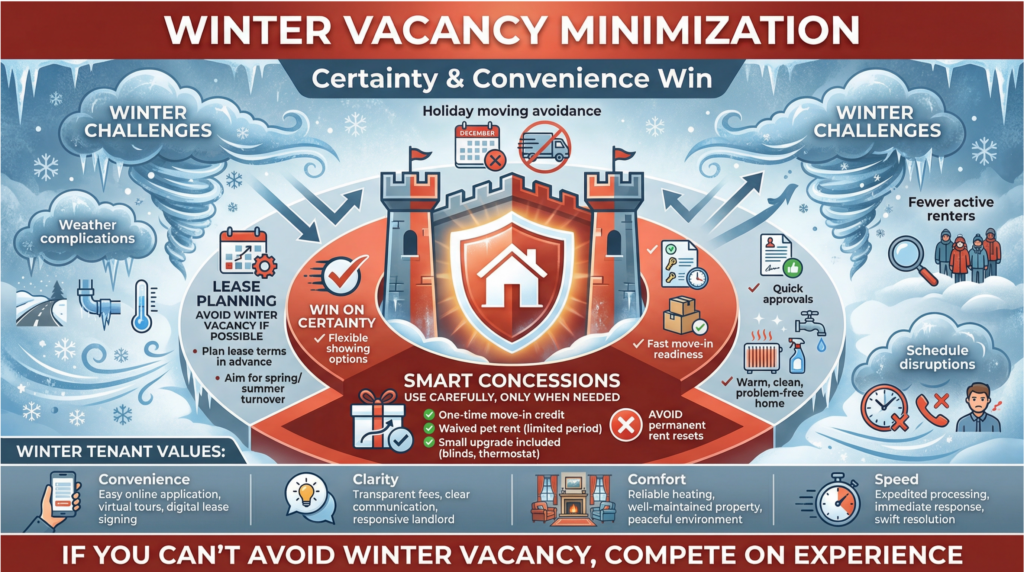
Winter: the “minimize vacancy” season
Winter leasing is possible, but it can be slower because:
- People avoid moving around holidays
- Weather complicates logistics (even in mild climates, schedules tighten)
- Fewer households want disruption
Even Zillow’s research notes that June is typically a peak month, implicitly reinforcing that other periods are less intense.
How to capitalize:
If you can avoid winter vacancy, do it.
This is where lease-term planning pays off. Many small landlords aim to avoid having a property go vacant in November–January unless the rent premium is worth the risk.
When you can’t avoid it, win on certainty.
In winter, tenants value convenience and clarity:
- flexible showing options
- quick approvals
- fast move-in readiness
- a home that feels warm, clean, and problem-free
Use concessions carefully (and only when needed).
Concessions can be a smart tool in slower markets. Zillow has reported elevated concession activity in 2025, including a high share of listings offering perks in June—an example of how even peak seasons can soften depending on broader conditions.
For small landlords, the key is to structure concessions so you don’t permanently reset your rent.
Common “safer” concessions:
- one-time move-in credit
- waived pet rent for a set period (if you’re comfortable with the pet)
- a small upgrade included (new blinds, smart thermostat) instead of free rent
Try to avoid concessions that become the new normal unless the market truly requires it.
Seasonal pricing power: what to watch (and what not to obsess over)
Seasonal pricing isn’t about guessing. It’s about monitoring a few practical indicators:
1) Comparable listings (your real competition).
Look at houses—not apartments—and match:
- beds/baths
- school zone (if relevant)
- yard and garage situation
- pet policy
- condition level
2) Days on market and showing volume.
If you’re priced right in a strong season, activity is immediate. If it’s quiet for a week in spring, that’s information.
3) Concession pressure.
When more listings include “one month free” or credits, that’s a sign renters have leverage. Zillow’s 2025 rent reports specifically track concession prevalence, which is useful for reading market softness or competition.
4) Your own renewal acceptance rate.
If good tenants keep renewing, you may be underpricing or you may simply be running a good operation. Either way, that’s a data point.
Turning seasonality into an advantage at turnover
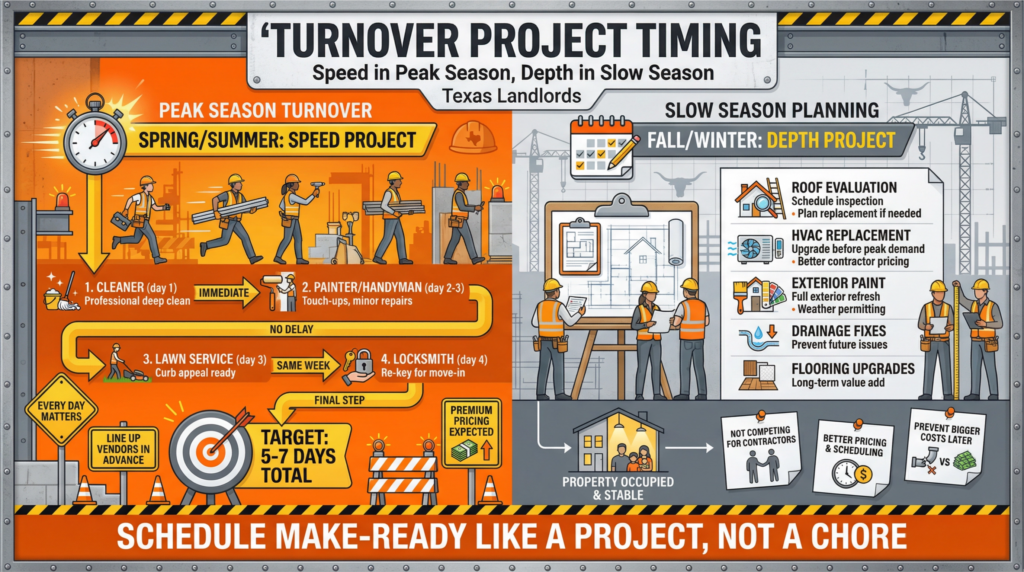
Turnover is where your profit can disappear quickly. Seasonality can reduce that risk if you plan around it:
Schedule “make-ready” like a project, not a chore.
Peak season rewards speed. Every day matters. Line up:
- cleaner
- painter/handyman
- lawn service
- locksmith
Use slower seasons for deeper work.
If your property is occupied and stable in fall/winter, that’s an opportunity to plan:
- roof evaluation
- HVAC replacement planning
- exterior paint
- drainage fixes
- flooring upgrades
Not because winter is “better,” but because you’re not competing with every other landlord for the same contractors.
The “bigger picture” trends that can change how seasonality behaves
Seasonality is real, but it’s not the only force. Broader market dynamics can flatten or amplify seasonal swings:
- Inventory shifts (more rental supply can reduce peak-season pricing power)
- Mortgage rates and buyer demand (if fewer people buy, more households rent longer)
- Single-family vs multifamily differences (they don’t always move together)
Zillow has highlighted that single-family rent dynamics can diverge from multifamily and that single-family rentals have, at times, commanded a notable premium relative to apartments.
The takeaway for small landlords: don’t assume apartment headlines apply to your house rental.
Also, use reputable data sources to ground your decisions. Apartment List, for instance, publishes rent growth rate files and vacancy index data across geographies—useful for tracking trends beyond gut feel.
Practical “seasonal strategy” decisions that improve returns
Here are investor-friendly moves that consistently pay off:
1) Control your lease end dates when you can.
Even a one-time 13–15 month lease can shift you into a better turnover window for years.
2) Renew earlier in slower seasons.
If you want to keep a good tenant, don’t wait until the last minute. Reduce the chance they get tempted by spring listings.
3) Budget for seasonal vendor pricing.
Contractors are often busier in peak season, and “urgent” costs more than “scheduled.” Use winter planning to lock in spring work.
4) Keep a “vacancy cushion.”
Seasonality means some vacancies will take longer. A small reserve prevents you from accepting the wrong tenant just to stop the bleeding.
5) Think in effective rent, not advertised rent.
A slightly lower rent with zero vacancy can beat a higher rent with three weeks empty—especially in a house where utilities and yard costs keep running.
Closing thought: seasonality is predictable—your stress doesn’t have to be
The rental market will always have hot months and slow months. The advantage goes to the landlord who expects it and builds around it.
When you treat seasonality like a strategy instead of a surprise, you get better outcomes:
- fewer rushed turnovers
- better tenants (because you’re not desperate)
- steadier cash flow
- smarter upgrade timing
- less mental load
And that’s what “capitalizing” really means: not squeezing every dollar out of every season, but running your rentals in a way that keeps returns strong and headaches low—year after year.


